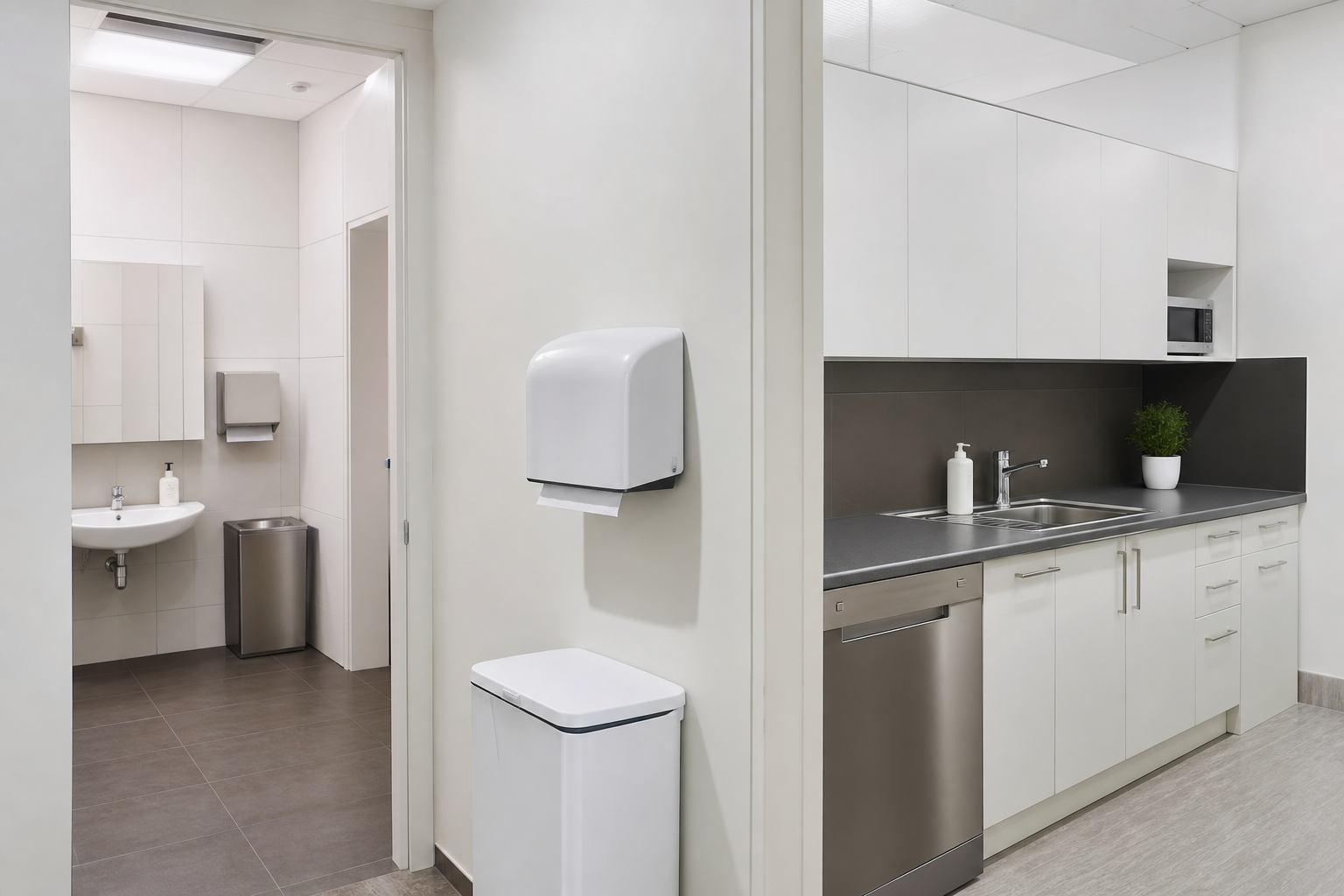
Workplace hygiene in Queensland is often reduced to a laminated poster and an annual policy tick-box. Staff judge whether their employer takes health seriously from the toilets, the kitchenette, and the door handles they touch every day — and regulators assess reasonable steps through much the same lens when something goes wrong.
We clean commercial premises across Brisbane's southern corridor. Hygiene compliance is operational — it fails when cleaning is treated as cosmetic rather than risk management.
What the Law Actually Expects
Queensland employers and persons conducting a business or undertaking have duties under the Work Health and Safety Act 2011 (Qld) to provide and maintain a work environment without risks to health — so far as is reasonably practicable. That broad duty does not prescribe a daily mop schedule, but it does require meaningful action on known hazards, including biological contamination in shared facilities.
Cleaning supports compliance; it does not replace it. A professional cleaner maintains agreed hygiene baselines — sanitary amenities, kitchenettes, touchpoints — while the business retains responsibility for ventilation, equipment maintenance, pest control, and staff hygiene training. Outsourcing cleaning does not transfer all WHS obligation.
Where Commercial Cleans Matter Most
Inspectors and insurers do not sample every desk. They look for patterns in areas where illness transmission concentrates: toilets, basins, door handles to amenities, kitchen benches, microwaves, fridge handles, and shared equipment. Neglect in these zones signals systemic indifference more loudly than dusty shelving in a storage room.
Retail and customer-facing workplaces add presentation risk. A dirty amenity staff tolerate privately becomes public reputation damage if a customer glimpses it. Showroom cleanliness and back-of-house hygiene are linked in customer perception even when physically separated.
Frequency That Matches Use
Daily amenity attention suits high-headcount offices and food-adjacent retail. Weekly full-office cleans suit lower-traffic professional suites. The wrong frequency is whichever one lets touchpoints develop visible grime between visits — staff notice before management does.
Amenities
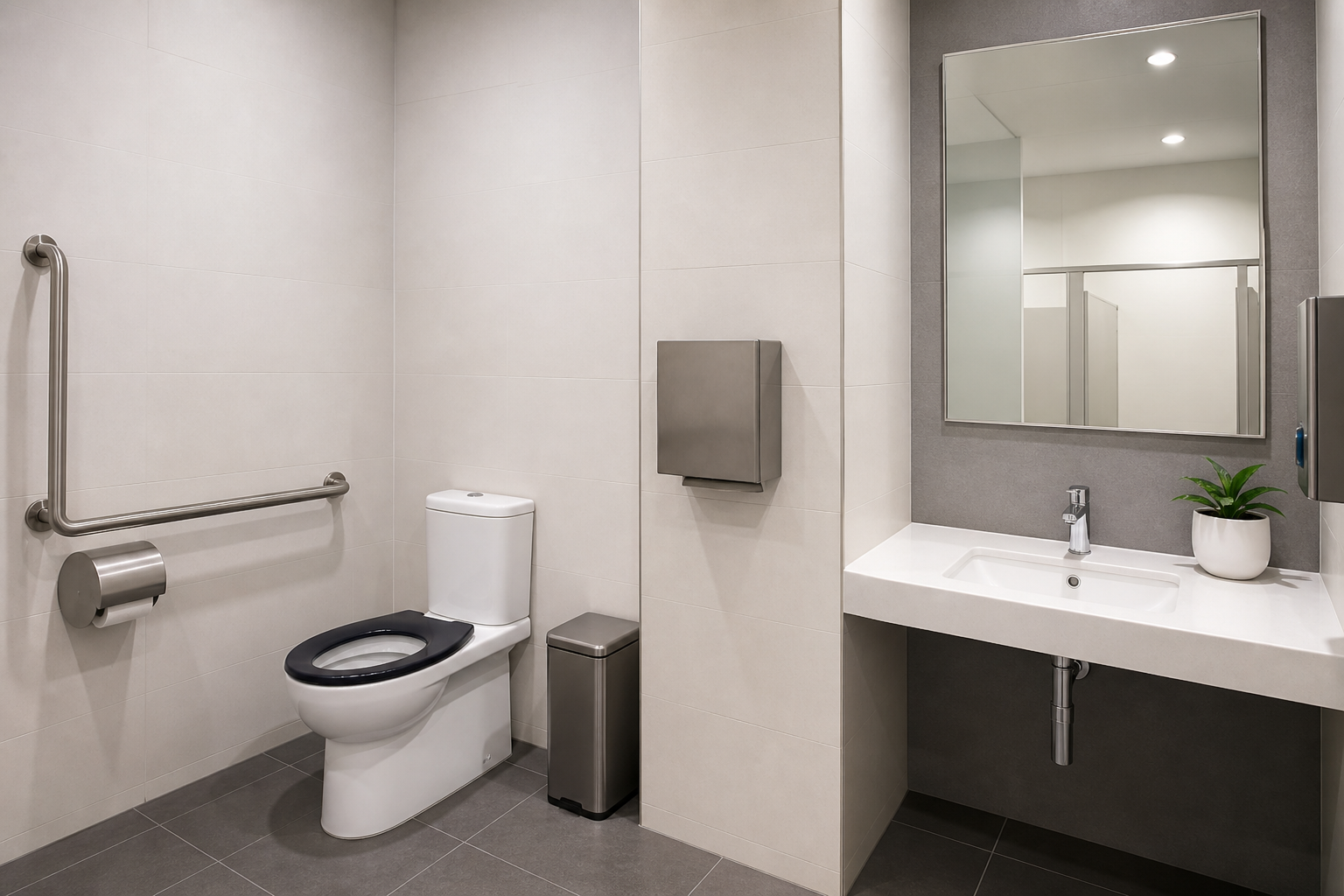
Toilets, urinals, basins, mirrors, floors — disinfected on schedule, consumables restocked when client supplies them.
Kitchenettes
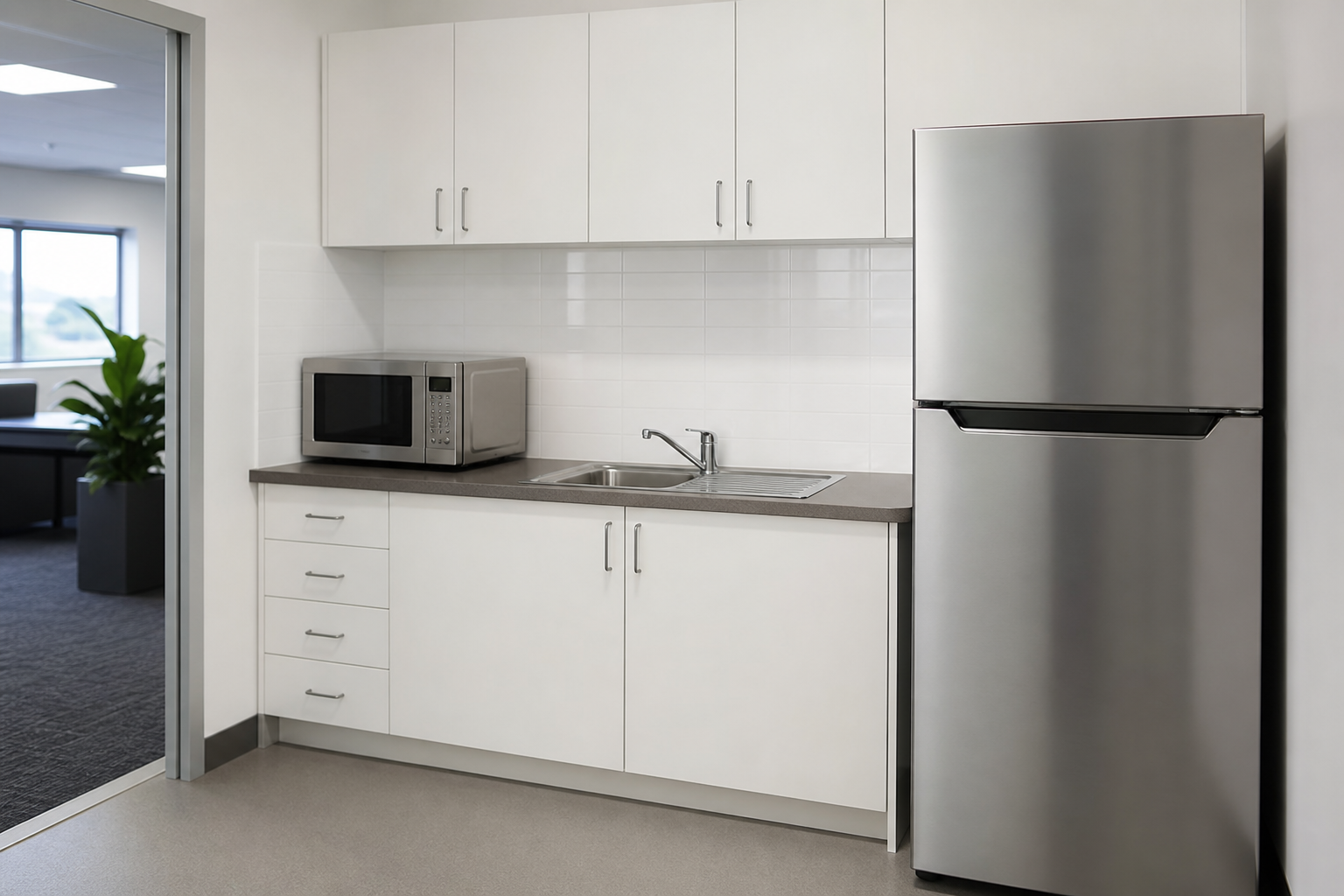
Benches, sinks, appliance exteriors, tables — grease and food residue removed before odour and bacterial growth establish.
Touchpoints
Handles, lift buttons where in scope, shared phones — high-frequency contact surfaces between full deep cleans.
Floors
Slip hazard reduction through spill response and regular hard-floor care in entries and amenities corridors.
Documentation and Scope Clarity
Commercial disputes we see rarely involve a single missed bin. They involve mismatched expectations — the client assumed fridges were included; the quote covered exterior wipe only. Written scope protects both parties and demonstrates reasonable practicable steps if hygiene complaints escalate.
Document inclusions: which rooms, which frequency, whether after-hours alarm access applies, who supplies paper products and soap. Ambiguity breeds non-compliance faster than laziness because neither side can verify completion.
Patterns We Push Back On
Lowest-bid tendering for commercial cleaning often strips amenity time first. Visually tidy open-plan desks mask toilets that have not been properly sanitised all week. Amenities are priced honestly because that is where WHS exposure concentrates.
Another pattern is treating COVID-era intensification as permanently optional. Queensland workplaces returned to normal operations, but elevated touchpoint attention remains a reasonable baseline — not theatrical spraying, but disciplined high-touch wiping on a defined cadence.
Staff Confidence Is a Business Outcome
Hygiene compliance is not only regulatory — it affects attendance and morale. Staff who distrust kitchen or bathroom conditions bring their own cups, eat at desks, and talk about it. Turnover follows culture. Consistent commercial cleaning is a visible signal that the workplace is managed with care.
Clients who invite feedback from staff after the first month often adjust frequency or scope based on real usage — more kitchen time for growing teams, extra bathroom passes for gender-balanced floors. Static scope without review drifts out of compliance quietly.
Practical Steps for Tenants and Managers
Align cleaning scope with actual headcount and amenity usage, not last year's headcount. Request written inclusions. Walk amenities the day after a clean — not the desk area — to verify standards. Treat hygiene complaints from staff as early WHS signals, not personality friction.
Documentation That Survives an Audit
A cleaning scope stored only in an email thread from two years ago is not documentation — it is a liability when staff complain or an incident occurs. Maintain a one-page scope summary: zones, frequency, products supplied by whom, after-hours access steps, and escalation contact. That document should match the quote accepted, not an aspirational wish list.
When auditors or property managers ask what hygiene measures are in place, specificity wins. "We have a cleaner" is weak. "Bathrooms and kitchenettes are sanitised three nights weekly under written scope with after-hours access registered with building management" is defensible.