
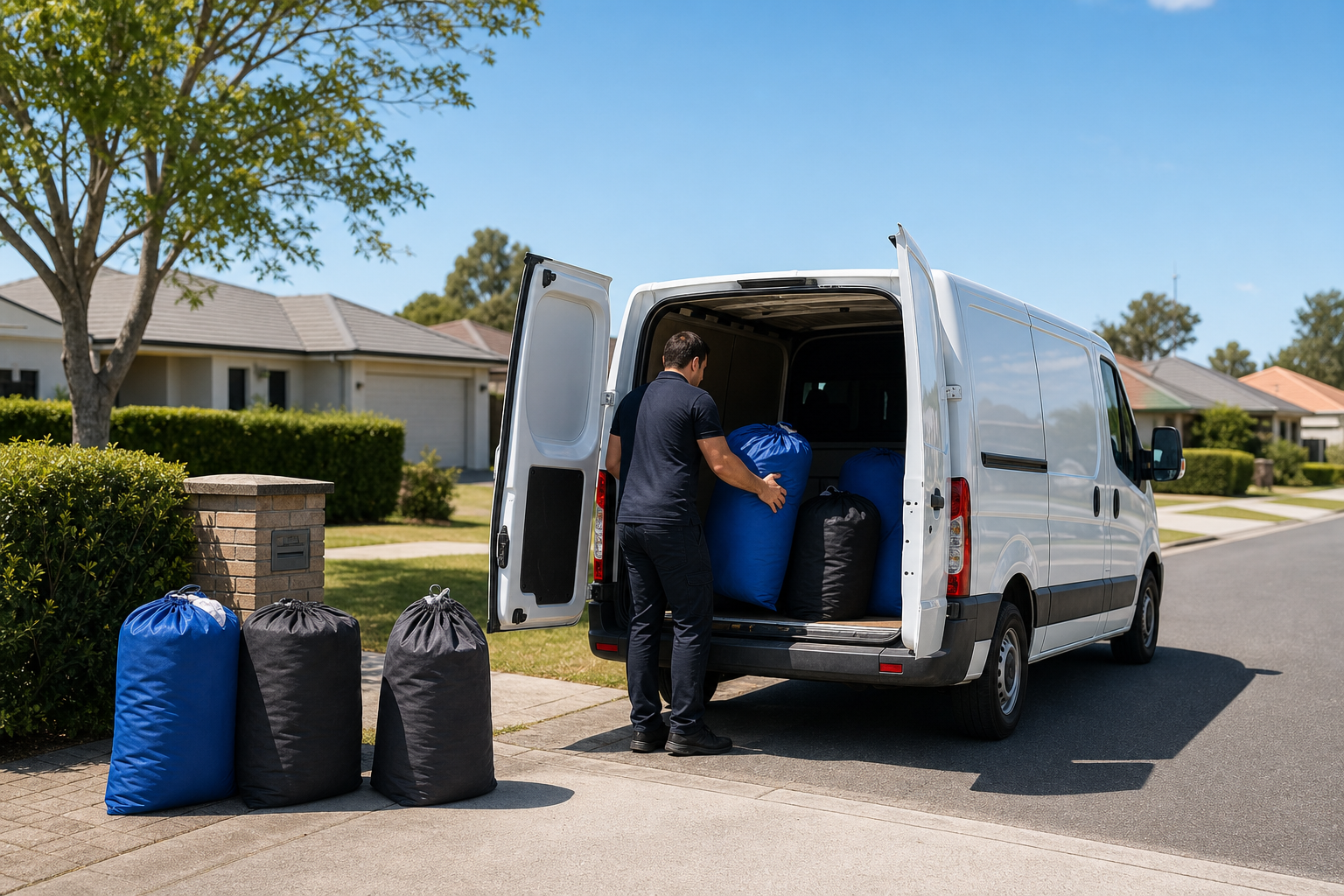
Pick-up and return looks simple on a banner: we collect, we wash, we return. Behind that line sits routing maths, calendar collisions, humidity, and the unglamorous work of labelling bags so Unit 4's doona cover does not dress Unit 9's queen bed.
We run pick-up and return across South East Queensland, concentrated around Mansfield, Mount Gravatt, and short-stay corridors into South Brisbane. Combined cleaning and linen under one schedule prevents the wrong-set deliveries and late returns that break multi-property hosting.
Routes Are Time-Window Problems
Clients imagine logistics as a van problem. In practice it is a deadline problem. Collection at 10:00 in Wishart, processing start by 11:30, dry completion before humidity peaks, return to Carindale before 15:00 check-in — that chain has no slack if traffic, access delay, or an overloaded dryer intervenes. Routes are designed backward from check-in deadlines, not forward from whichever suburb happens to be convenient that morning.
Consolidating multiple properties on one route improves economics and reliability — until one host's late check-out compresses the entire sequence. Routes need buffer for known risks, not best-case fantasy.
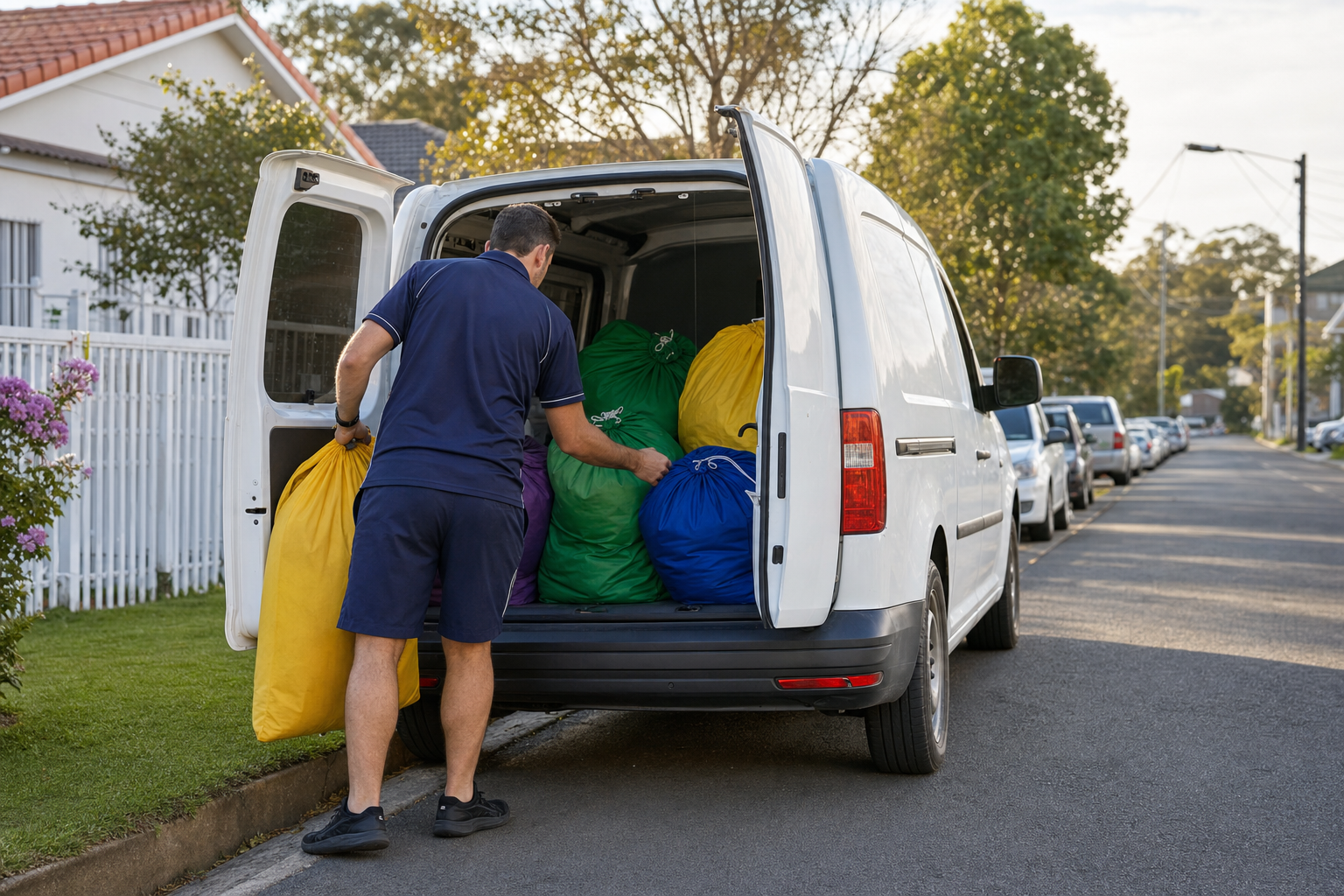
Labelling and Chain of Custody
Mixed linen is a logistics failure with guest-facing consequences. Every bag should identify property, textile set, and whether items are standard or delicate. Hosts who throw multiple units into identical white bags without tags create rework at the facility — and rework consumes the buffer that kept the route on time.
Expected textile counts per property should be documented at onboarding. Discrepancies at collection — missing bath mat, extra sofa bed set — are flagged immediately, not discovered at return when the next guest is en route.
Drying times extend on humid days. Logistics plans that assume January dryer throughput in March Brisbane weather miss return deadlines. Processing priority belongs to the tightest check-in window — and hosts deserve honest notice when climate conditions threaten same-day turnaround.
Four Disciplines That Keep Routes Honest
- Collection windows — agreed slots with unattended access options (lockbox, reception) so pickups do not fail because nobody answered the door.
- Processing priority — tightest check-in gap items enter the queue first, not whoever collected earliest.
- Return placement — clean bundles to linen cupboard, bed, or staging area per property protocol.
- Exception reporting — stains, damage, or short counts communicated before return, not after guest arrival.
When Pick-Up Beats On-Site Laundry
Some properties have internal laundry sufficient for a single set. Portfolio hosts with overlapping bookings rarely do. On-site washing between 11:00 check-out and 15:00 check-in works only with multiple sets rotating off-site — which is pick-up logistics under another name. Honest conversation about machine capacity beats pretending one set can teleport through a dry cycle.
Residential clients use pick-up for bulky items — doonas, curtains — that strain home machines. The logistics differ from host routes but share the same labelling discipline.

Common Failure Modes
Laundry providers without integrated cleaning often miss calendar context — they return clean linen at 16:00 because that fits their route, while the cleaner finished at 13:00 and dressed beds with whatever remained in the cupboard. Integrated scheduling removes handoff gaps.
Distance creep is another: accepting addresses too far apart for the fee charged, then compensating by rushing dry cycles. Partially damp linen folded for transport moulds in bags. Geographically incoherent routes get declined rather than delivering odour to the next guest.
Technology Helps; Protocols Win
Calendar integrations reduce manual errors — bookings visible alongside collection triggers. Technology does not replace bags labelled in permanent marker with property codes hosts actually use. The best systems combine digital calendars with physical custody discipline.
Hosts managing six or more units should treat logistics as a supply chain, not a favour from a cleaner. Minimum textile inventory per property, rotation rules, and escalation when a set is retired — these operational decisions determine whether door-to-door laundry scales.
Questions Before You Engage
What is your latest collection time for same-day return before a 15:00 check-in? How do you handle late check-outs? What labelling do you require? What happens when a stain will not lift? Specific answers reveal whether a provider has run routes under pressure or only theorised about them.
Peak Weekends Need Ranked Priority
Route planning is not drawing suburbs on a map. It is ranking collections by immovable deadlines, grouping properties with compatible access windows, and building slack for the late check-out that always appears on Saturday. Providers who treat every collection as equal priority will fail portfolio hosts the first time three units turn the same afternoon.
Hosts can help by standardising bag labelling, keeping spare sets on site, and communicating calendar changes before guests arrive. Providers can help by refusing unrealistic windows instead of accepting them and delivering at 15:05.