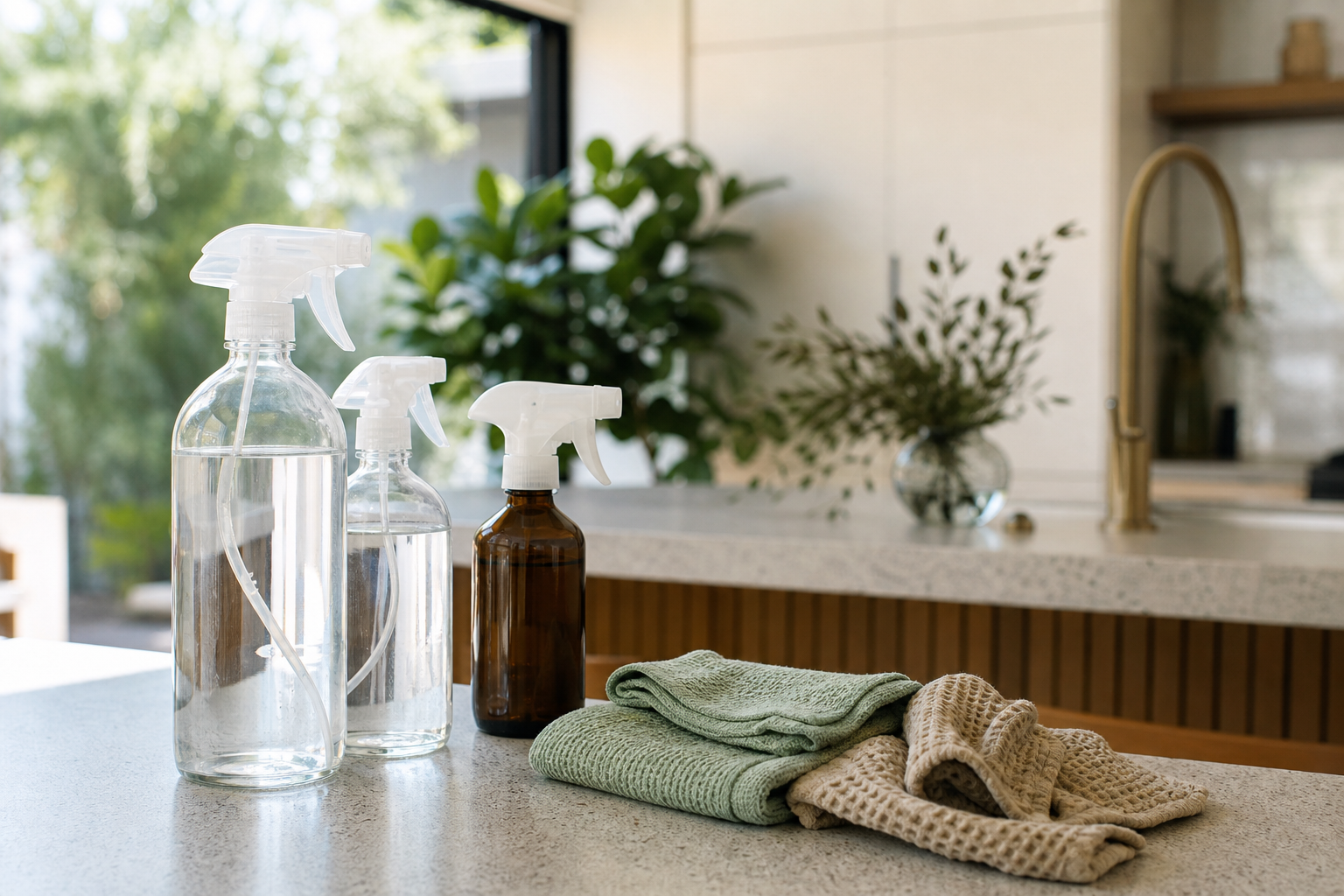
More clients ask for "eco-friendly" or "chemical-free" cleaning without accepting weaker results. The market responds with green labels on bottles that look identical under the sink. A more useful position: low-impact chemistry should reduce unnecessary harshness while still performing on Queensland soils, humidity, and the surfaces common in local construction.
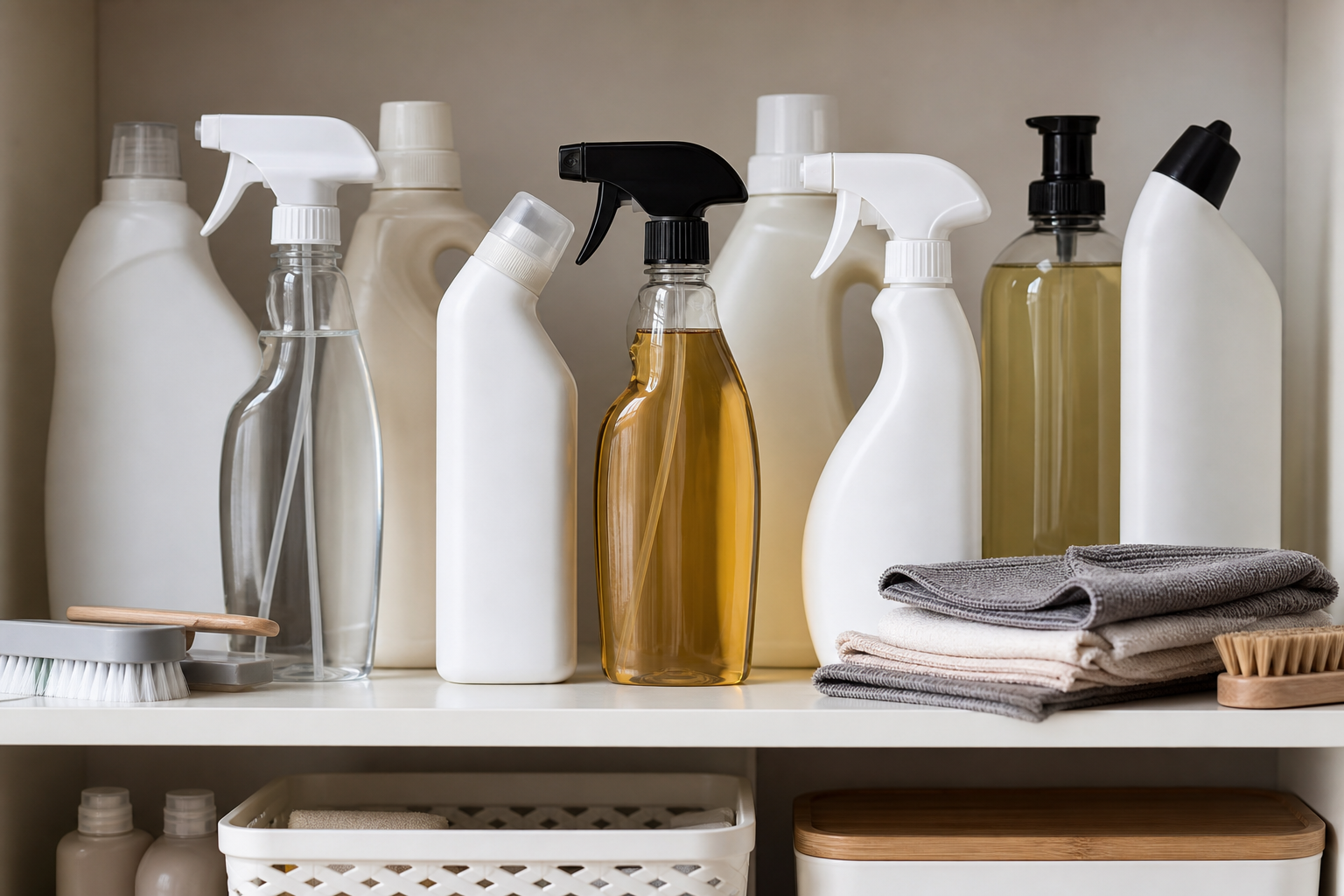
Product selection here is task-driven — sanitary ware, stone benchtops, timber floors, and high-turnover Airbnb textiles each impose different constraints. Low-impact is not one bottle; it is a hierarchy of choices within professional outcomes.
What Low-Impact Should Mean
Low-impact chemistry minimises unnecessary volatility, fragrance load, and surface damage risk while achieving hygienic and visual outcomes. It does not mean water only. It does not mean skipping disinfection on bathroom touchpoints between Airbnb guests. It means asking whether a stronger product is justified for the soil type, or whether a pH-appropriate alternative achieves the same result with less downstream harm to grout, sealants, or indoor air quality.
Queensland properties accumulate sunscreen residue on glass, red soil dust in entries, and mould spores in poorly ventilated wet areas. Low-impact approaches must still address these realities — with technique and correct formulation, not wishful dilution.
Surface-Specific Judgement
Engineered stone benchtops punish acidic cleaners. Timber floors punish excess water. Chrome fixtures streak under wrong cloths regardless of product green credentials. Professional low-impact cleaning maps products to material first, label claims second.
Client preferences — fragrance sensitivity, toddler households, asthma concerns — are noted at enquiry and adjusted where practicable. Complete fragrance elimination in commercial amenities is sometimes impractical when odour control is part of the brief; residential maintenance offers more flexibility.
Where Stronger Formulations Still Apply
Shower mould remediation, oven degreasing, and some commercial sanitary situations justify stronger chemistry applied with controlled contact time and ventilation. Low-impact does not mean under-treating health-relevant biological growth.
Product Tiers by Task
- Daily maintenance — pH-neutral or mild formulations on floors and dusting; adequate for routine soil without cumulative surface attack.
- Sanitary ware — hospital-grade or food-safe disinfectants on toilets and basins where turnover or workplace standards require.
- Glass and streaks — technique and microfibre discipline often outperform ammonia-heavy sprays for indoor air quality.
- Textiles — commercial laundry detergents balanced for hygiene and fabric life; overdosing harms linen and waterways alike.
Greenwashing We See Regularly
"Plant-based" labels on products that still contain synthetic preservatives and allergens. "Chemical-free" claims that are literally false — water is a chemical. Certification stickers without task-specific performance data. Hosts and households deserve honesty: what works, on what surface, with what trade-off.
Suppliers who publish ingredient transparency and dilution guidance beat those who rely on leaf graphics. That is operational judgement, not virtue signalling.
Technique Reduces Chemical Load
Preheat and dwell time on greasy oven surfaces reduce how aggressive a degreaser must be. Mechanical agitation on grout lowers bleach dependency. HEPA vacuuming removes particulate before sprays aerosolise dust. Professional training concentrates chemistry where soil resists mechanical removal — the opposite of soaking entire rooms in general-purpose spray because it smells clean.
Low-impact cleaning is therefore a labour-and-knowledge model, not a product swap alone. Discount operators who cut training keep chemical load high because untrained staff only know one bottle.
Disposal and Concentration
Dilution control matters environmentally and economically. Over-concentrated solutions rinse into Queensland stormwater and sewage systems unnecessarily. Training follows manufacturer specifications, not "if it smells strong it works better" folklore.
Empty containers and cloth laundering cycles are part of impact too — reusable microfibre programmes beat disposable wipe mountains when laundered correctly between properties.
Low-Impact Service
When clients request gentler products, we specify constraints and surfaces at quote stage. Bathrooms are disinfected between guests, stone benches are protected with surface-appropriate chemistry, and mould beyond mild soap scum is treated with products matched to the substrate.
Matching Chemistry to What Is Actually There
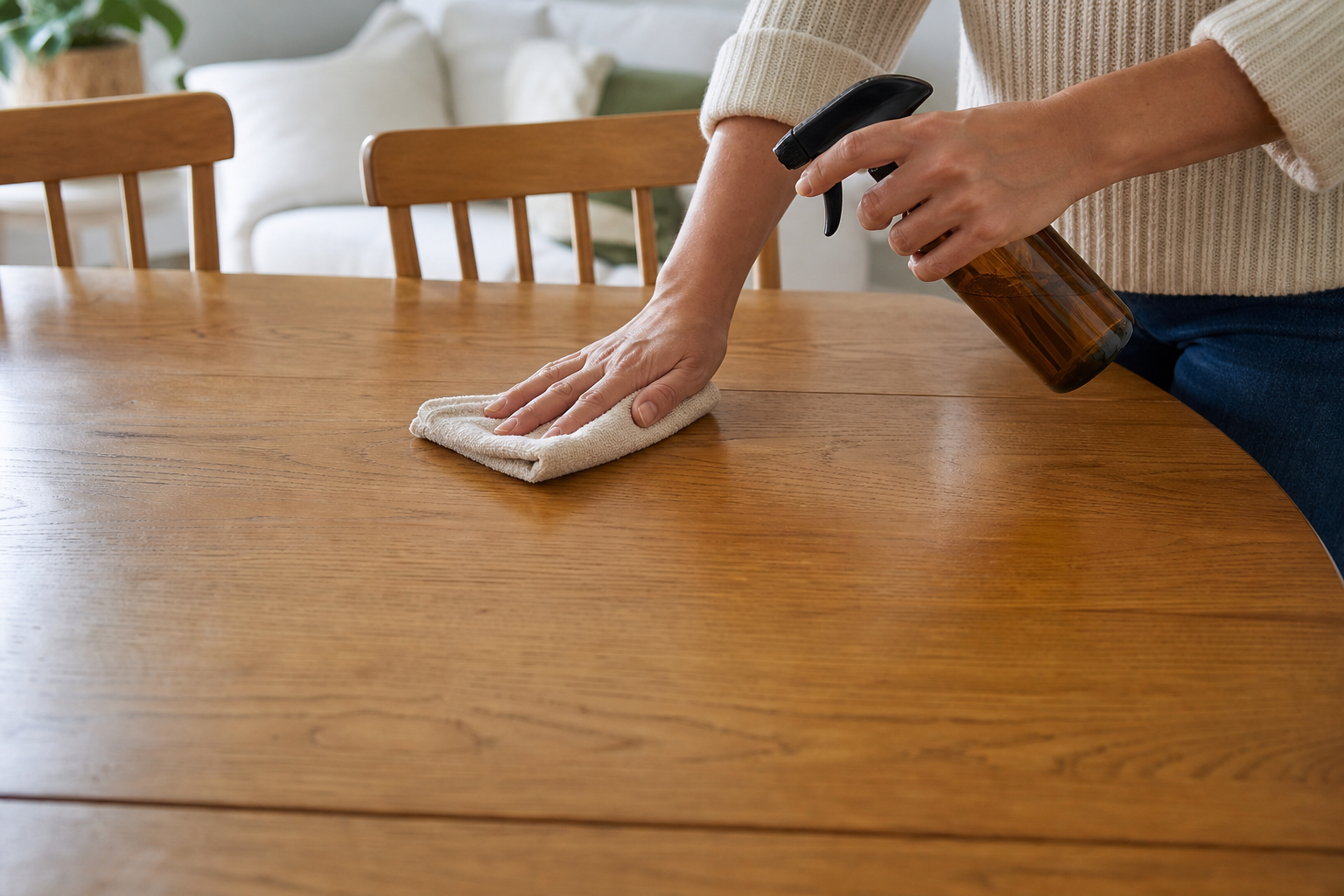
Sealed stone, engineered timber, and painted cabinetry each punish the wrong product differently — etching, clouding, or sticky residue that attracts dust. Professional cleaners match chemistry to surface after inspection, not after damage. "Eco-friendly" labels on a bottle do not tell you whether that bottle belongs on bathroom tile or a kitchen island.
Clients with children, pets, or fragrance sensitivities should discuss constraints at enquiry stage. Accommodation is often possible without abandoning efficacy — but only when surfaces and risks are known upfront, not discovered mid-contract.