
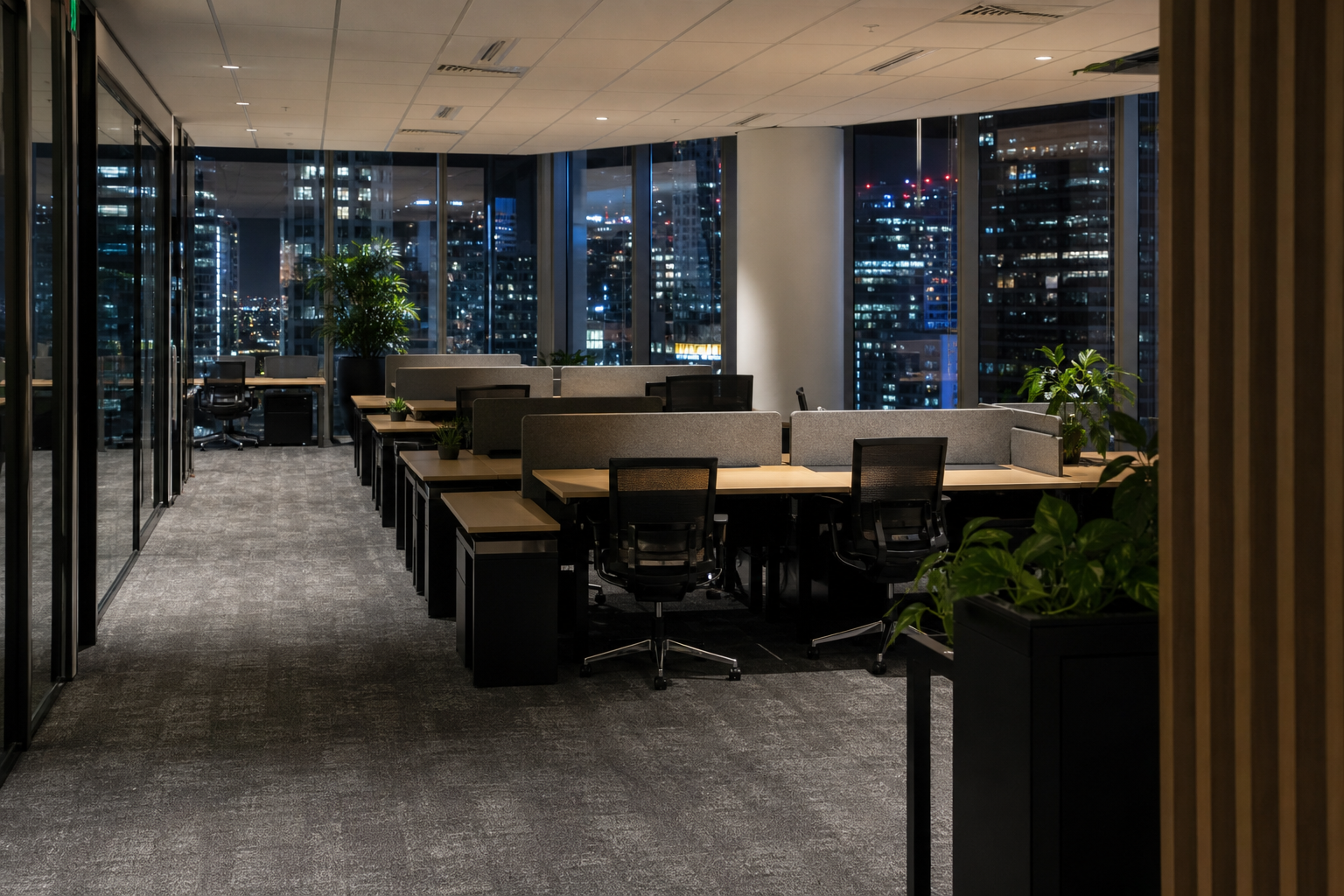
A professional services firm in a South Brisbane office suite needed after-hours cleaning that respected building security protocols, alarm sequences, and a reception area visible to late-working tenants on the same floor.
Background
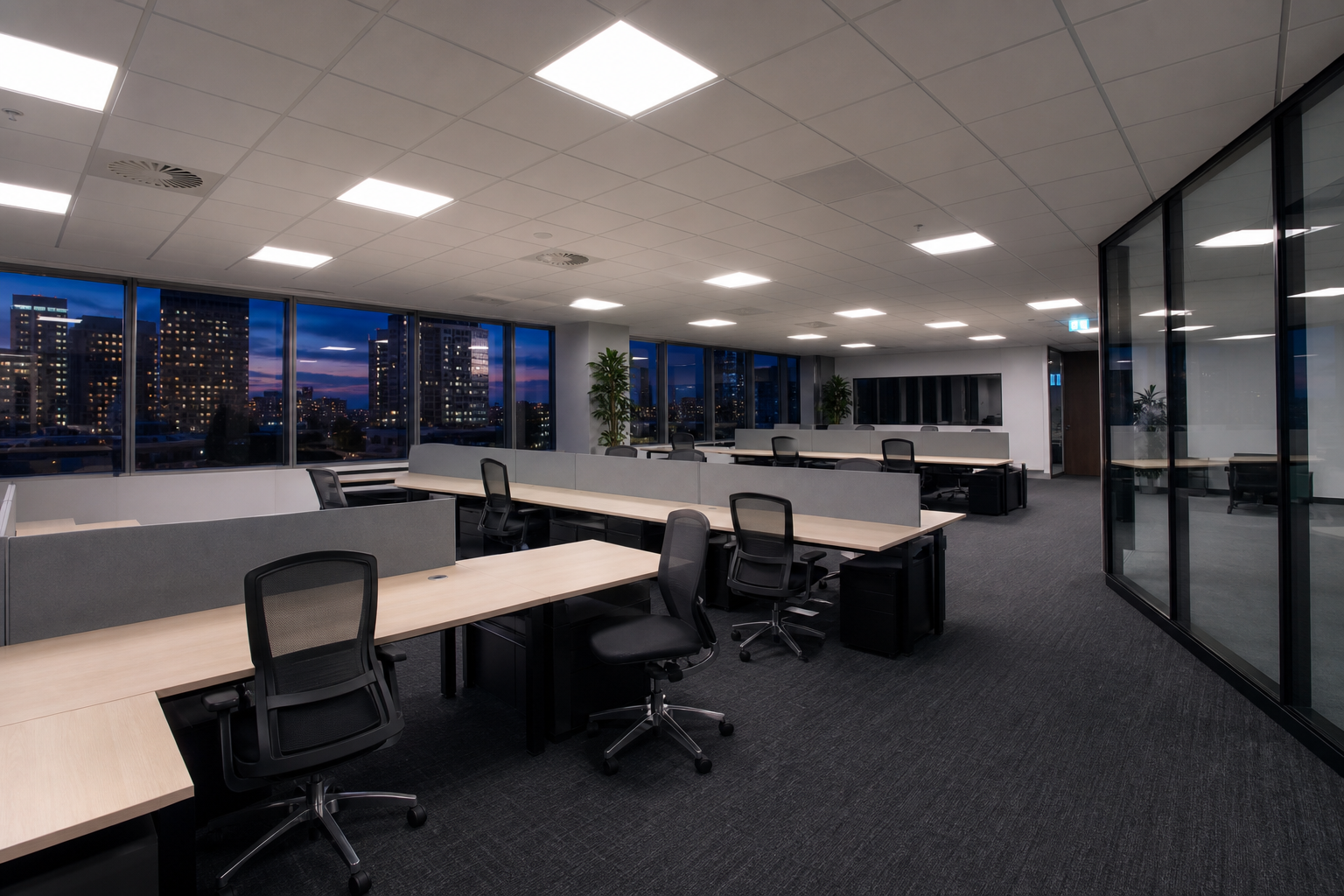
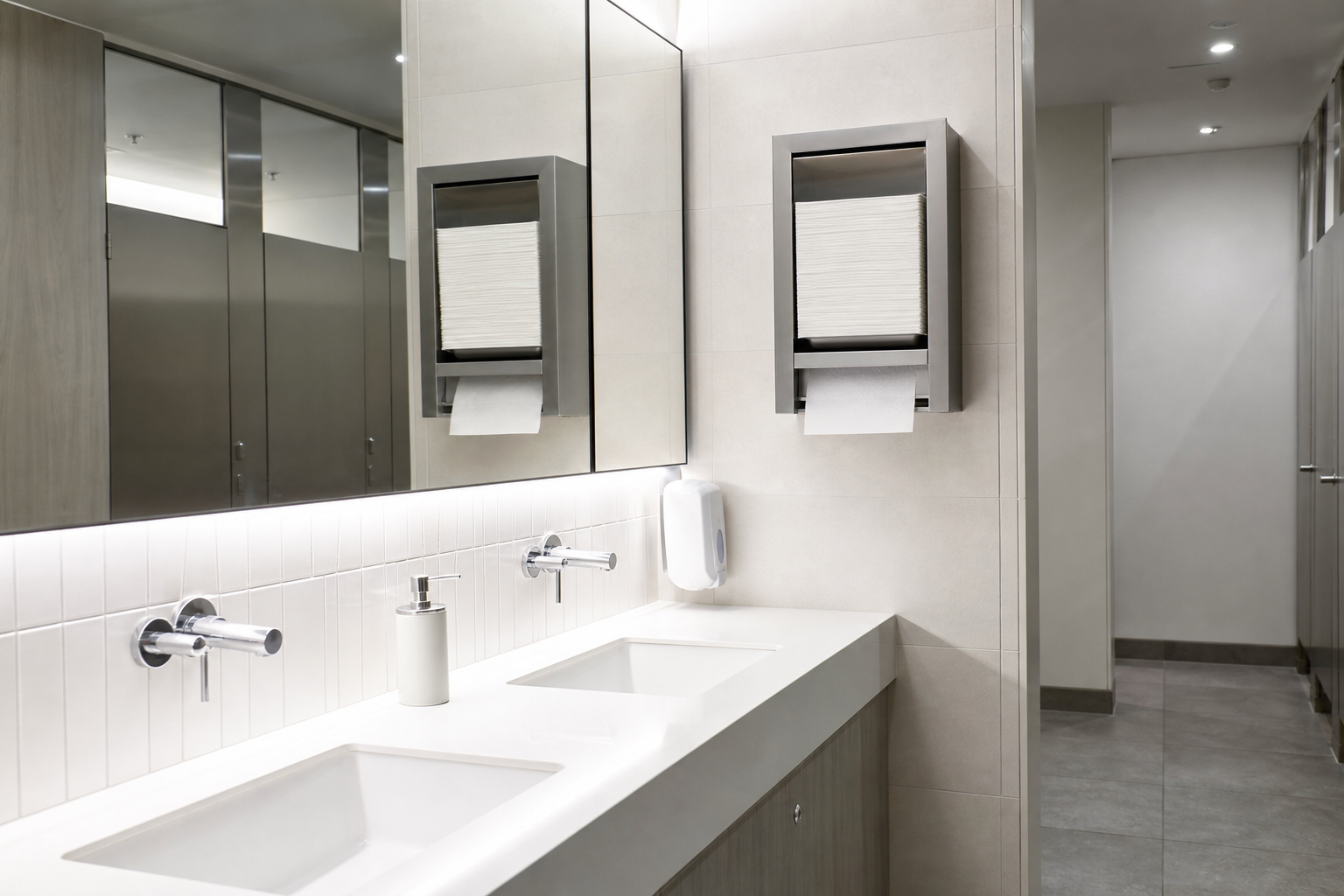
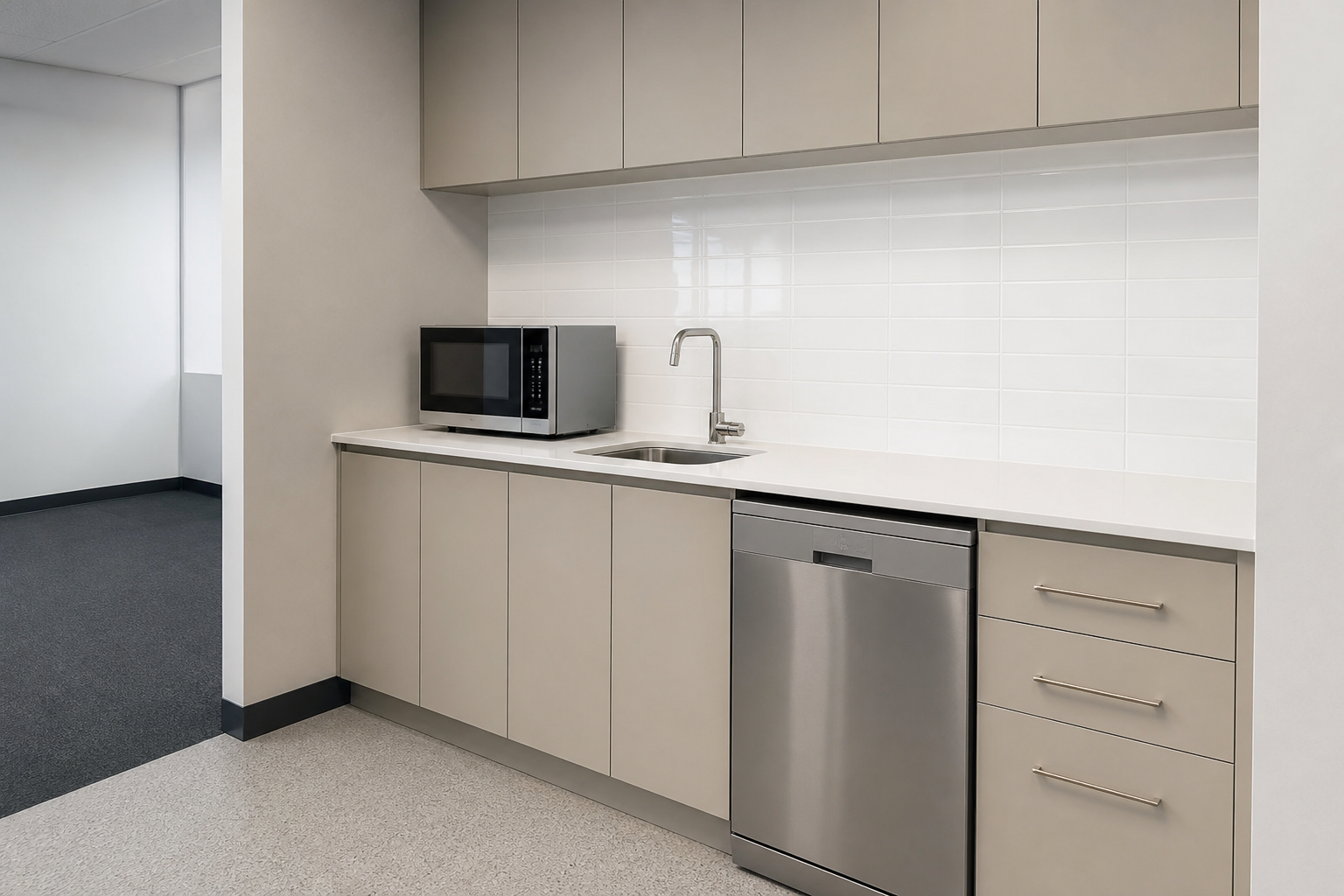
The tenancy employed twenty-two staff across open-plan and meeting rooms with a shared kitchenette and two amenity blocks. A previous cleaner attended irregularly — sometimes twice weekly, sometimes once — with kitchen bins left overflowing before Monday morning. Building management had warned twice about alarm disarm timing when cleaners arrived before the last tenant left or left before properly securing the suite.
The office manager wanted a fixed three-night schedule, documented quiet-hours compliance, and kitchenette attention on every visit rather than a rotating task list that skipped amenities when time ran short.
Problem
Missed kitchenette attention, bins overflowing before morning staff arrival, and inconsistent bathroom stocking. Building management feedback about alarm disarm timing when cleaners arrived late or left early. Staff morale suffered from amenities that looked clean at desks but failed closer inspection.
Solution
A three-night weekly clean was scoped covering workstations, meeting rooms, kitchenette, amenities, and entry presentation. Alarm and key procedures were documented with building management, a consistent arrival window was fixed after tenant departure, and amenity-focused tasks were assigned to every visit rather than rotated fortnightly.
Operational Constraints
The tenancy sat on a floor shared with a medical practice that occasionally ran evening appointments. Cleaners could not use loud equipment after 21:00 under building rules. The building's loading dock closed at 18:30, limiting bulk waste removal for kitchenette recycling. Security required photo ID registration 48 hours before first access — reactive one-off cleaners had repeatedly failed this step.
Methodology
Permanent access credentials were registered with building management and a quiet-hours task sequence was documented — vacuuming and mopping completed before 20:45, with wipe-down and amenity tasks following. A fixed three-night pattern (Monday, Wednesday, Friday) aligned with highest staff occupancy days. Kitchenette tasks ran every visit: bench sanitisation, appliance exterior, sink and tap descale, bin empty and liner replace, and dishwasher filter check. Bathroom consumables were restocked from client-supplied inventory stored in the stationery cupboard.
Measurable Outcomes
Building management feedback ceased within the first month. Internal staff surveys noted improved kitchenette and bathroom confidence. The tenancy maintained the arrangement through a subsequent headcount increase, with scope adjusted to add meeting room frequency without changing provider.
Summary
After-hours cleaning fails when access credentials are treated casually. Register with building management, fix quiet-hours task sequences, and run amenity tasks every visit — not on rotation. Alarm procedures and kitchenette scope are documented in the contract and applied on every scheduled clean.
Ongoing Service
The three-night weekly schedule continues with updated scope after headcount growth added two meeting rooms to the rotation. Building management contact details and quiet-hours rules remain documented and reviewed annually. The tenancy treats cleaning as fixed infrastructure — budgeted, scheduled, and corrected promptly when staff report an issue.