
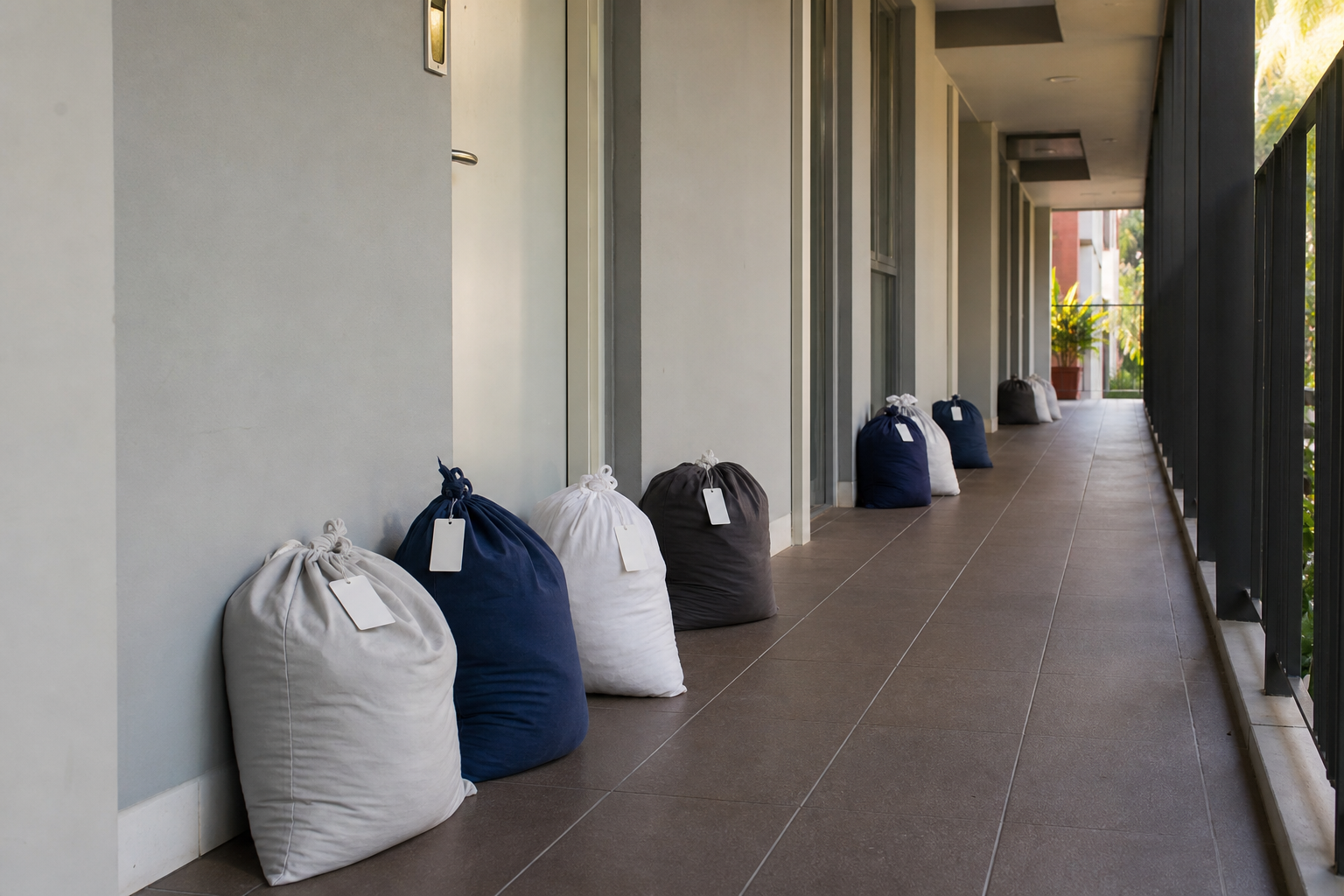
A portfolio host with six furnished units across three suburbs needed reliable linen rotation without personally driving bags between properties and a laundromat every Saturday morning.
Background
The host operated furnished units in Mansfield, Mount Gravatt, and Coorparoo — two-bedroom apartments and a three-bedroom house with pool towels. Weekend bookings frequently overlapped, and mislabelled bags had twice delivered queen sets to a property configured with kings. Saturdays were spent driving between units and a public laundromat instead of adjusting pricing or responding to maintenance requests.
One missed linen return before a 14:00 check-in produced a partial refund and a cleanliness complaint that property-coded processing and priority ranked by guest arrival time would have prevented.
Problem
Overlapping weekend bookings exhausted on-site laundry at several units. Mislabelled bags delivered wrong towel sets to the wrong address, and linen coordination consumed Saturdays that should have gone to pricing and maintenance.
Solution
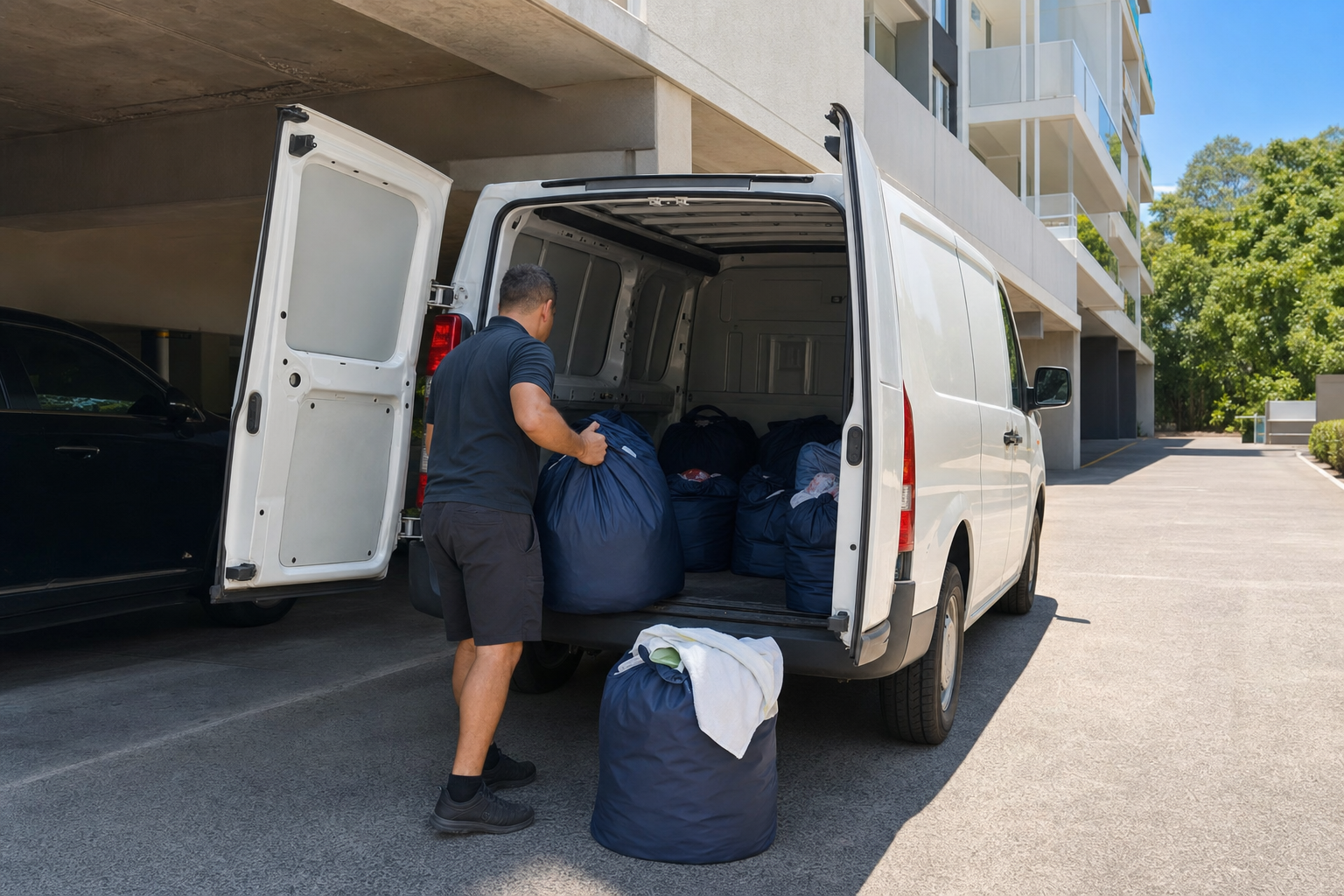
A recurring pick-up route was designed with property-coded bags, documented textile manifests per unit, and priority processing ranked by check-in deadline. Collections aligned with turnover cleans where possible — soiled linen removed while properties were accessed for cleaning, clean bundles returned to designated cupboards before dress.
Operational Constraints
Properties were spread across Mansfield, Mount Gravatt, and Coorparoo with no central storage. Several units used body-corporate laundries that prohibited commercial-volume washing. Peak Saturday turnovers on three properties could overlap within a four-hour window. One Carindale-adjacent unit had no on-site parking for collection vehicles during school pick-up hours.
Methodology
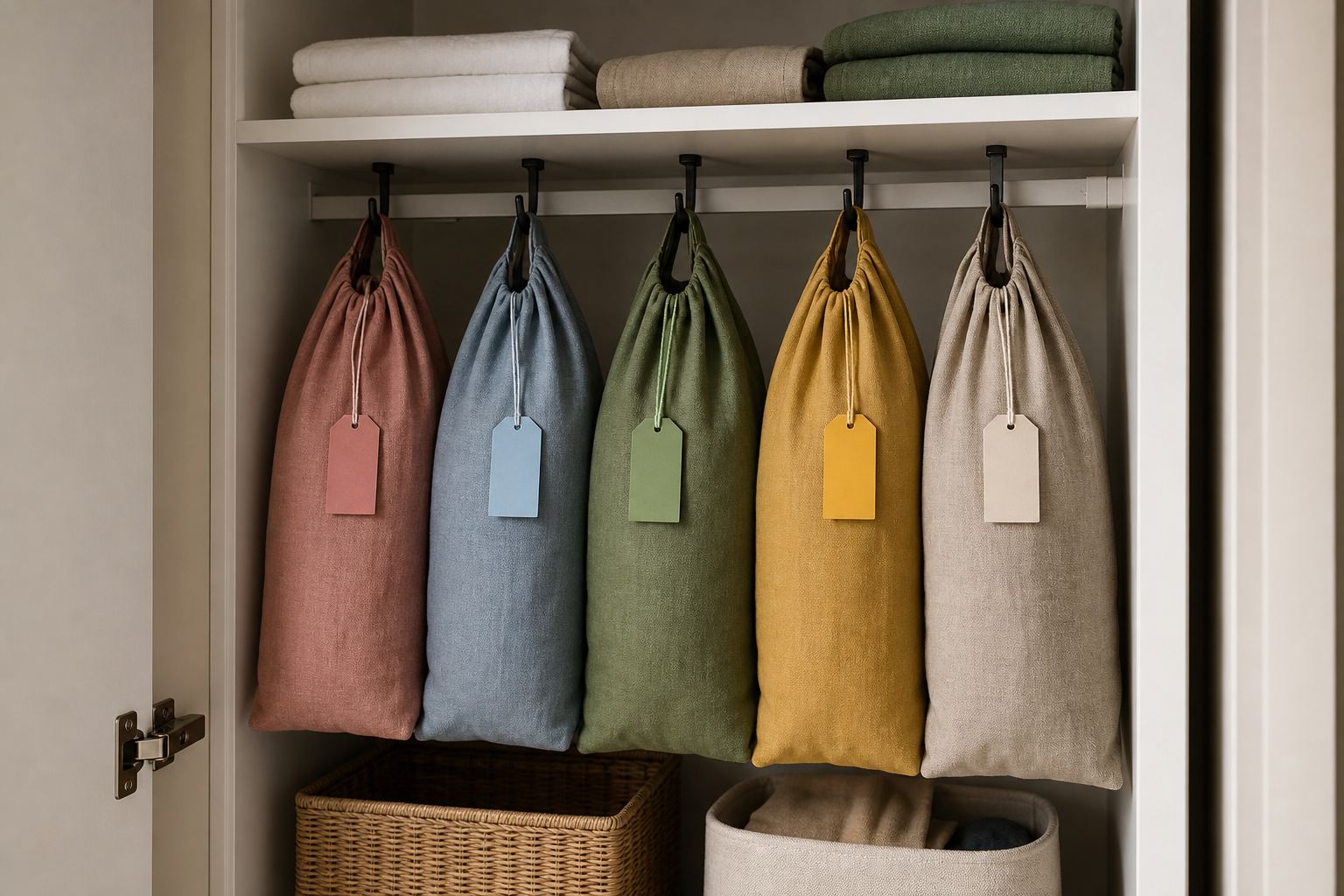
Each unit received a colour-coded bag set and a laminated textile manifest listing exact piece counts — queen sets, king sets, pool towels, sofa throws. Pick-up windows were tied to cleaning access: soiled linen removed during turnover cleans, clean sets staged in sealed bags inside designated cupboards. Processing priority was ranked daily by earliest guest check-in across the portfolio. A shared spreadsheet tracked bag location status so the host could see which units were awaiting return without calling.
Measurable Outcomes
Wrong-set deliveries dropped to zero after labelling protocol adoption. The host reclaimed an estimated six hours per peak weekend previously spent on linen logistics. No further check-in delays attributable to linen availability were reported across a subsequent peak holiday period. The route remains active with seasonal volume adjustments.
Summary
Multi-unit hosting breaks when linen is bolted on after cleaning is sorted. Property-coded bags, textile manifests, and priority ranked by check-in deadline turn laundry from a recurring crisis into a scheduled operation. Weekend overlap windows are planned in advance so wrong-set delivery and late returns do not reach check-in.
Ongoing Service
The route scales seasonally — additional collections before Queensland school holidays, reduced frequency in quieter winter weeks. Bag inventory is audited quarterly so worn labels and missing spare sets are replaced before peak demand, not during it.